A tactical RPG can make a single step feel heavier than an entire minute of real-time combat. You move a unit behind a wall, pause over an attack preview, and wonder whether three points of damage are worth exposing another character. That hesitation is not accidental friction. It is the result of rules making future consequences visible enough to imagine, but uncertain enough to fear. I spent years designing systems that tried to produce this feeling. I learned that the best tactical RPG encounters do not simply ask whether the player can win. They ask what kind of risk the player is willing to carry.
The real unit of strategy is not the turn
Designers often describe a turn as the basic unit of a tactical RPG. That is technically true, but it is not how the player experiences it. The meaningful unit is usually the commitment. A character moves into range, spends an action point, breaks cover, uses a consumable, or reveals a hidden ability. After that decision, the board changes and the player has fewer good responses available.
This is why a short turn can create more tension than a long one. If a character has two actions, the first action may preserve flexibility while the second closes doors. Move, attack, and retreat are not three separate verbs in the player’s mind. They are competing futures. A strong system makes those futures legible through range indicators, threat zones, cooldowns, status icons, and enemy facing. The player should not know everything, but they should know what kind of ignorance they are accepting.
I used to make a version of the mistake of adding more abilities when an encounter felt shallow. More buttons rarely fixed the problem. The stronger repair was often to make positioning, timing, or information matter more.
Action economy turns math into pressure
Action economy is the relationship between the actions a side receives and the value of those actions. In a tactical RPG, defeating one enemy usually does more than remove its health bar. It removes its future attack, movement, debuff, and opportunity to block a route. That is why focusing fire can feel dramatically stronger than spreading damage evenly, even when the damage totals look similar.
Consider a squad facing four enemies. If one character spends a turn applying a modest debuff while another finishes an injured target, the team may gain more safety than it would from two larger attacks. The dead enemy no longer occupies space or consumes an action. The debuff, meanwhile, changes the odds of several later exchanges. Good combat lets players discover this relationship without requiring a spreadsheet.
The danger is runaway advantage. Once one side gains an extra action, it can often create another advantage, then another. Designers control this with reinforcement timing, resilient enemies, comeback abilities, limited resources, or objectives that punish passive play. When those controls work, winning feels earned. When they fail, the encounter becomes a cleanup operation after the real decision has already happened.

Terrain is a language of permission
A tile is not just a place to stand. It tells the player what actions are safe, desperate, efficient, or impossible. High ground may extend range. A doorway may compress the enemy’s approach. Difficult terrain may protect a slow unit from pursuit while making escape harder. Cover can turn a likely hit into a gamble, but only if the game communicates which attacks ignore it.
I look for three things when studying terrain: how quickly the player can understand its value, how many turns that value lasts, and whether the enemy can use it with the same rules. Symmetrical rules are not always necessary, but asymmetry must be readable. If an enemy crosses a hazard without consequence while the player cannot, the player needs an explanation that appears before failure, not after a reload.
The most interesting maps create competing claims on space. A healing point may be safe now but exposed later. A narrow bridge may protect a healer while preventing allies from rotating around a flank. These are not decorative choices. They shape the order in which the player solves the fight.
Enemy intent creates trust
A tactical RPG needs uncertainty, but pure unpredictability quickly feels unfair. The useful middle ground is forecastable danger. An enemy can announce its target, charge a powerful attack, reveal a preferred range, or show that it is guarding a specific objective. The player still has to respond, but the response is based on evidence.
This is where enemy AI and presentation meet. An enemy may technically choose targets through a complicated scoring system, yet the player experiences only an icon, animation, or movement pattern. If those signals disagree with the result, trust collapses. Players stop planning and start testing the game for traps.
I do not assume every visible warning reflects an elegant internal simulation. Sometimes a telegraph is a carefully designed promise layered over simple logic. That is fine. The system is not hiding; it is speaking in a language most players can translate. The numbers are evidence. The experience is the conclusion.
A useful test is to pause before an enemy acts and write down the likely target and reason. Repeat this across several encounters. If the prediction is consistently wrong, the problem may not be difficulty. It may be that the game has failed to expose the rule it expects the player to learn.
Failure should teach a specific lesson
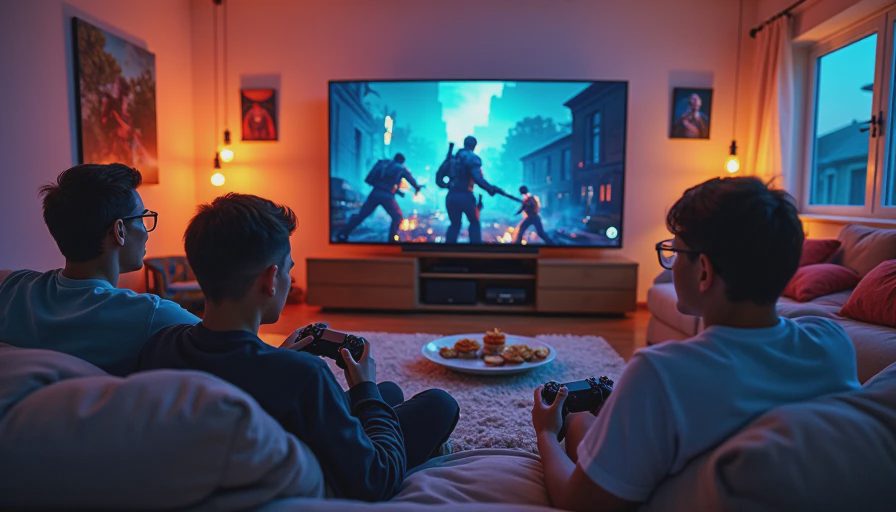
The best tactical RPG defeat leaves a clean question behind. Did I overextend the front line? Did I spend the stun too early? Did I misunderstand how armor works? Did the map make a dangerous route look safe? A loss becomes valuable when the player can connect it to a decision rather than to a vague shortage of power.
This does not mean every failure must be comfortable. Some encounters should overwhelm a careless squad. The important distinction is whether the game offers evidence before the mistake becomes irreversible. A new enemy ability can be surprising once; repeated surprise without readable preparation becomes noise.
Checkpoints and rewind systems change this learning loop. A rewind lets the player test a different branch without paying the full cost of replaying ten minutes. That can reduce frustration while preserving consequence, because the player still has to understand which decision to change. Ironically, generous retry tools can make a tactical RPG feel more demanding: they encourage experimentation instead of cautious repetition.
How to read a tactical RPG like a designer
When I investigate a combat system, I start with a simple capture: the board state before the decision, the action chosen, and the new threats created afterward. I do not begin by asking whether the encounter is fun. I ask what the game made visible, what it concealed, and which resource became scarce.
Then I compare similar situations. Does high ground matter more than cover? Is a weakened enemy still dangerous because it controls a route? Does the player lose because of damage, time, positioning, or information? A small notebook is enough. Record health values, movement ranges, cooldowns, and the number of turns before reinforcements arrive. Mark which numbers are observed and which are guesses.
After several fights, patterns emerge. You may find that the game rewards killing the nearest enemy, protecting a particular unit, or delaying attacks until an objective changes. You may also find that your original explanation was wrong. I have mistaken a visibility rule for an AI preference more than once. Revising the hypothesis is part of the method, not an embarrassment.
That is the enduring appeal of a tactical RPG. It turns invisible design choices into felt pressure. Every arrow, doorway, cooldown, and warning is part of an argument about attention. The player supplies judgment, but the system supplies the consequences. Once you learn to watch both, a familiar battle becomes readable in a new way: not as a puzzle with one answer, but as a machine that shows you exactly where your confidence broke.



No entries yet — sign the first.