The best co op board games do something more interesting than place several people on the same side of a table. They turn conversation into a resource, uncertainty into pressure, and a group decision into a mechanical event. I have watched a room become quiet over a card draw, then erupt because one player noticed a detail everyone else had missed. The pieces were simple. The system underneath them was not.
I used to think cooperative design was mainly about balancing the enemy against the number of players. Add more threats, increase the health total, shorten the timer. That model explains part of the experience, but not the important part. A strong cooperative game also controls information, authority, attention, and the cost of hesitation. The numbers are evidence. The experience is the conclusion.
Cooperation is more than taking turns
In ordinary turn-based design, a player usually asks, “What can I do?” In co op board games, the more useful question is, “What should we do together, and who should decide?” That difference creates a second layer of play above movement, combat, drafting, or card management.
Consider a game in which one player can defeat an enemy but another can prevent a future crisis. The immediate action feels powerful, while the preventive action feels abstract. If the group always chooses the visible reward, the system is not necessarily failing. It may be revealing a priority conflict. The game has made short-term certainty compete with long-term stability.
This is where communication becomes mechanical rather than decorative. Players exchange partial plans, estimate risks, and establish informal rules such as “save that ability for the next round.” A table with experienced players may appear calm, but that calm is often the result of learned information flow. Everyone knows which details matter and which can wait.
The most effective co op board games make those conversations consequential. If every plan works equally well, discussion becomes theater. If the game hides too much, discussion becomes guessing. The useful middle ground gives players enough evidence to form a plan, then introduces a pressure that can disrupt it.

The quarterback problem is an information problem
Cooperative games are often criticized for allowing one player to control the table. That player is sometimes called the quarterback: the person who reads every card, calculates every line, and issues instructions while others execute them. It is tempting to treat this as a personality flaw. I think the deeper cause is usually information structure.
If one player can see the complete state, compare every option, and suffer no special cost for speaking first, central control is the rational outcome. The group has accidentally created a single-player puzzle with extra hands. The other players still make moves, but they no longer own meaningful decisions.
Designers can resist this through hidden information, asymmetric roles, simultaneous planning, communication limits, or abilities that only make sense from a particular viewpoint. Pandemic uses role specialization to give players different practical priorities. Hanabi goes further by restricting what players may say about their own cards. The Crew makes communication itself a scarce tool. These approaches do not magically eliminate dominant voices, but they change who possesses useful knowledge.
The distinction matters when analyzing co op board games. A rule that looks restrictive on paper may protect participation. A rule that looks generous may erase it. I watch for the moment when a player stops proposing an action and starts waiting for instructions. That behavioral shift is often more revealing than a rulebook’s stated intention.
Failure needs to teach the table something
A cooperative loss can produce excitement, frustration, or simple resignation. The difference usually depends on whether the failure exposes a readable cause. If the group loses because it spent too many actions solving a local problem while ignoring a visible global track, the lesson is painful but legible. If a random event creates an unavoidable collapse, players may blame the deck rather than revise their strategy.
This does not mean every loss should feel fair in a narrow mathematical sense. Tension needs uncertainty. A crisis should sometimes arrive earlier than expected. But players need a way to connect the outcome to choices they made. In my notes, I separate what happened from what I infer. “The threat track advanced twice in three rounds” is an observation. “The game wants us to prioritize prevention” is an interpretation.
The best co op board games make that interpretation testable. On the next attempt, the group changes one behavior: it scouts before fighting, preserves a flexible card, or assigns one player to monitor the escalating threat. If the result changes, the table has learned a system rather than merely memorized a lucky sequence.
That learning loop is why repeated failure can feel better than a shallow victory. The first session supplies confusion. The second supplies a hypothesis. The third reveals whether the hypothesis survives pressure. This is system archaeology at a small wooden table.
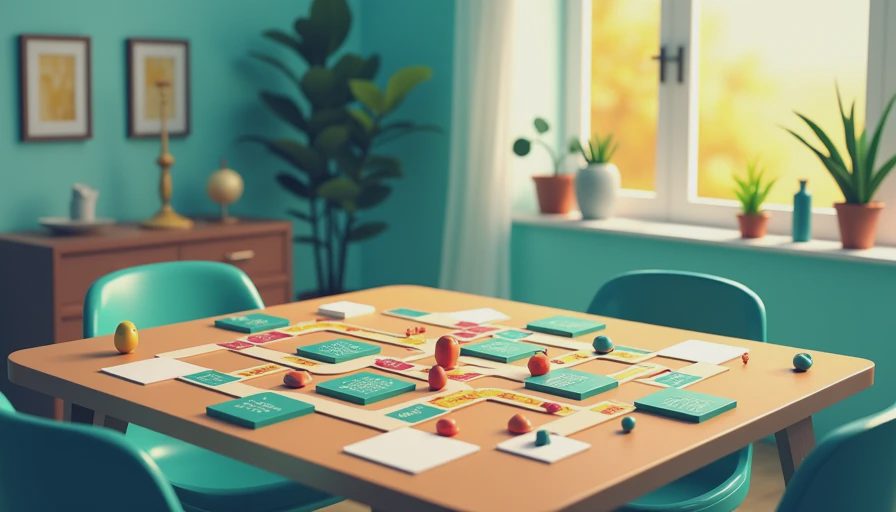
Time pressure changes the shape of conversation
Many co op board games use rounds, escalating decks, action limits, or scenario clocks to prevent endless discussion. Without some pressure, the group can calculate until every decision feels obvious. With too much pressure, players stop exchanging useful information and begin making hurried guesses.
The interesting variable is not simply how many minutes a turn takes. It is how the clock changes attention. A four-action turn may encourage planning if players can discuss freely before acting. A hidden countdown may create dread because nobody knows how much preparation remains. A threat deck can function like a second player, interrupting plans at regular intervals and forcing the group to re-evaluate its priorities.
I used to make a version of this mistake in system prototypes: adding urgency after the strategy was already complete. The timer then felt like an annoyance attached to the puzzle. Good pressure is integrated earlier. It changes which information players seek, which risks they accept, and when they commit.
When examining co op board games, I ask whether the clock creates meaningful tradeoffs. Does moving faster leave resources behind? Does careful play increase the chance of a larger future problem? If the answer is yes, time is not merely a punishment. It is part of the decision space.
Roles create attachment, but asymmetry creates friction
A role is memorable when it changes what a player notices. The medic watches health and recovery. The scout values positioning and future options. The defender measures exposure. These identities can create strong attachment because each player sees the shared board through a different filter.
But asymmetric roles also create translation costs. A specialist may understand a powerful combo that makes little sense to the rest of the table. A support player may feel essential while receiving little visible credit. Designers can reduce this friction with clear feedback: tokens, distinct action language, or outcomes that show how one player enabled another.
The strongest co op board games make contribution visible without turning the experience into a scoreboard. A player should be able to say, “That worked because I prepared the route,” and have the board confirm it. At the same time, no role should become a mandatory service job performed while everyone else makes the exciting decisions.
This is also why player count changes the feel of a game. At two players, each person may control multiple roles and maintain a clear overview. At four, communication becomes richer but slower, and specialist knowledge can be diluted. The rules may be identical, yet the information network is different.
How to read the system at your table
When I test co op board games, I keep a short observation log instead of relying on the post-game mood. I note when the table became silent, which rule caused the longest argument, and whether a loss produced a new plan. I also record who spoke first, who changed the group’s priority, and whether that influence came from information, confidence, or simply volume.
Then I replay one variable. We may change the opening order, protect a different resource, or impose a communication limit for one scenario. This is not a scientific experiment; too many conditions remain uncontrolled. It is still better than declaring a game “too random” after one unlucky session or “perfectly balanced” after one clean win.
The point of co op board games is not to remove disagreement. It is to give disagreement structure. A good system lets players argue about priorities, test a plan, absorb a setback, and recognize the consequences together. When that loop works, the cardboard stops feeling like a collection of rules. It becomes a language for shared attention.
That is the sensation I keep looking for: not simply victory, but the moment a group understands why its plan succeeded or failed. The system is not hiding. It is speaking in a language most reviews do not translate.




No entries yet — sign the first.