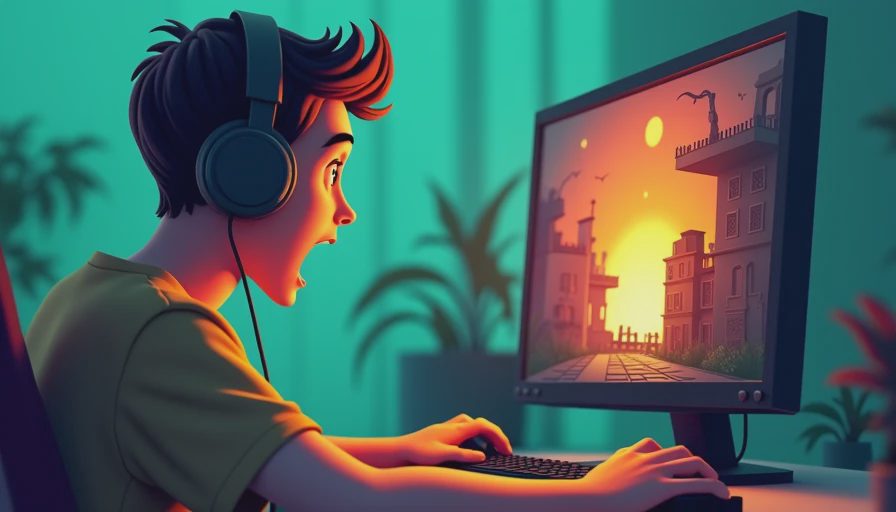
The best roblox horror games do not frighten me because every hallway contains a monster. They work because they control what I know, what I expect, and how quickly I can act. I notice this most when playing late, with headphones on, after the obvious scare has already happened. The room becomes quiet, but I keep moving carefully. That hesitation is the real design achievement.
I used to treat horror as a presentation problem: dark lighting, distorted audio, a threatening creature. After working on interactive systems, I see it differently. Horror is often an information problem. The game gives me enough evidence to form a plan, then removes one important piece at the worst possible moment. The numbers are evidence. The experience is the conclusion.
What makes Roblox horror effective
A useful starting point is uncertainty. In Doors, for example, the player learns a readable rhythm: open rooms, search for resources, listen for danger, and keep advancing. The structure creates safety through repetition, then breaks that safety with an encounter or environmental change. The scare is not only the entity. It is the sudden failure of a pattern I had trusted for several minutes.
The best roblox horror games usually build tension with three layers. First comes anticipation, created by a sound cue, a blocked route, or an area that looks deliberately too empty. Next comes interpretation, when the player decides whether the signal is important. Finally comes commitment: hiding, running, solving a puzzle, or opening the next door. If those stages happen too quickly, the moment feels like a cheap pop-up. If they take too long, attention drains away.
That timing is difficult to tune. A chase can be terrifying for twenty seconds and exhausting at two minutes. A hiding mechanic can create suspense when hiding places are limited, but become routine if every closet is equally safe. The strongest games keep changing the value of familiar actions without changing the rules so often that players feel cheated.
The difference between a scare and a threat
A jump scare is an event. A threat is a relationship between the player and the rules. The Mimic understands this distinction through pursuit, sound, and constrained movement. Even when I cannot see the enemy, I can often infer its presence from a cue, a changed space, or the cost of choosing the wrong direction. My imagination supplies the missing image, which is usually more efficient than showing a detailed monster model.
A strong threat also gives the player a partial answer. In Pressure, the environment and objectives create pressure through forward motion, limited information, and the possibility that stopping to inspect something is itself dangerous. I am not simply waiting for a scare. I am weighing time against knowledge. That trade is what makes a hallway feel hostile.
This is where many lists of the best roblox horror games become less useful. They describe atmosphere, enemy designs, or story beats, but skip the decision structure. Ask a more practical question instead: what does the game make me do while I am afraid? Do I move toward danger because the objective demands it? Do I abandon a resource to escape? Do I replay the same section while refining a route? Those actions reveal the machinery underneath the mood.
The system is not hiding. It is speaking in a language most reviews do not translate. A loud sting tells me that something happened. A delayed audio cue, an unreliable hiding place, or a narrowing corridor tells me how the game wants me to think.
Why sound often does more work than visuals
Sound is powerful in Roblox horror because visual assets are often stylized, simple, or familiar. A low mechanical hum can establish a threat before the player knows its location. Footsteps can create distance information. A sudden reduction in ambient noise can mark a transition without a cutscene or a warning label.
Apeirophobia is a useful example of spatial anxiety. Its large, repetitive areas make navigation itself uncertain. When visual landmarks are weak, sound and memory become navigation tools. I begin tracking turns, room shapes, and escape routes. The fear comes from losing confidence in my map of the space, not merely from seeing an enemy.
Good audio also respects attention. If every noise signals danger, players stop listening. If danger is always silent, sound cannot teach anything. The most effective patterns mix meaningful cues with harmless texture. I might hear something approaching, but I still need to determine whether it is close, passing by, or responding to my movement. That interpretation keeps the player active.
The best roblox horror games make silence carry information. A missing ambient loop, an elevator that takes too long, or a door that closes without the usual sound can be more unsettling than a scream. The player notices the difference before understanding it, and that gap creates dread.
Failure needs to teach, not merely punish
Horror games depend on failure, but repeated death can destroy tension if the player cannot identify the cause. Piggy demonstrates a more legible approach in its chase structure: the player sees the threat, understands that routes matter, and can improve through practice. The pressure remains, but failure produces information about timing, pathing, and objective order.
That does not mean every rule should be explained. Mystery needs room to breathe. The important distinction is whether the player can build a reliable hypothesis after a mistake. If I die because I ignored a sound cue, I can adapt. If I die because an unseen rule changed without evidence, I blame the game rather than the monster.
I used to make a version of this mistake. I would add more enemy behavior when the real problem was unclear feedback. More complexity rarely fixes confusion. Sometimes the better solution is a brighter silhouette, a consistent warning sound, or a few extra seconds before the chase begins.
When comparing the best roblox horror games, I look at the retry loop. How long does it take to return to the meaningful decision? Does the game preserve progress, or force a long replay? Is the next attempt about strategy, or just hoping the random sequence is kinder? Randomness can create fresh fear, but it should not erase the player's ability to learn.
A practical way to choose your next game
If you want a tense solo experience, start with a game that limits information without removing all control. Doors is a natural entry point because its room-based progression teaches players how to read sound, resources, and pacing. For stronger environmental disorientation, try Apeirophobia. For pursuit and story-driven pressure, The Mimic offers a different rhythm. If you prefer multiplayer chaos, Piggy turns fear into route planning and group communication.
Before choosing among the best roblox horror games, decide which sensation you want. Do you want to feel hunted, lost, powerless, or responsible for a teammate's mistake? Those are different design goals. A game built around pursuit may feel less frightening if you want slow investigation. A maze may feel irritating if you want clear objectives but can be excellent when uncertainty is the point.
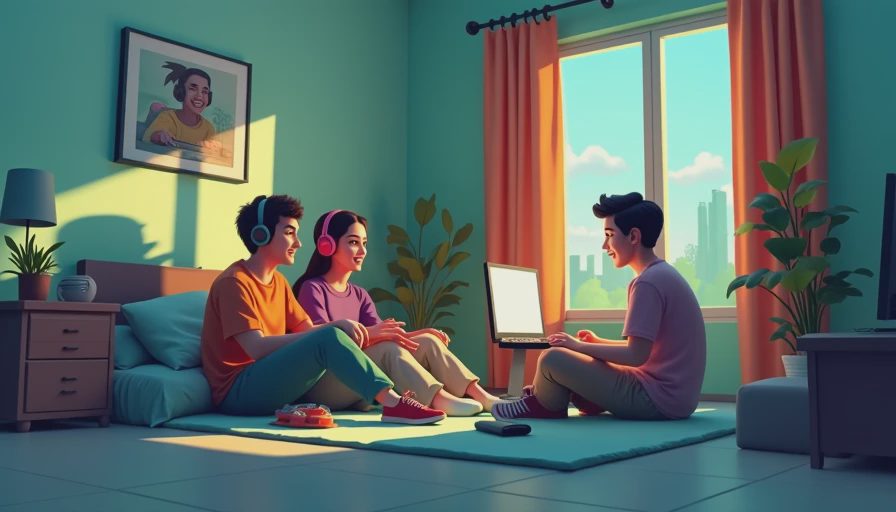
I also recommend playing with headphones, reducing distractions, and giving a game at least one full attempt at its intended pace. Watching a reaction clip reveals the scare, not the system. Playing reveals the delay before the scare, the misleading cue, and the small decision that caused the failure.
The real lesson behind the list
The best roblox horror games are not necessarily the ones with the most elaborate monsters. They are the ones that make ordinary actions unstable. Opening a door, checking a corner, spending a resource, or trusting a sound becomes a decision with a cost.
That is why I keep returning to system archaeology. I want to know why a simple corridor can feel more dangerous than a detailed battlefield. Usually, the answer is not hidden in the graphics. It is in timing, information, and the player's shrinking confidence. This is what I saw, and this is what I think it means: fear becomes memorable when the game gives me enough control to feel responsible, then enough uncertainty to make that control fragile.


No entries yet — sign the first.