The first time a game makes me hesitate before opening an ordinary door, I stop thinking about the plot. I start looking at the machinery. That hesitation is the real subject behind ps2 horror games: how limited visibility, awkward movement, sound, save systems, and enemy behavior turn a familiar hallway into a negotiation with your own attention.
I spent years treating horror as a matter of atmosphere. Then I replayed several PlayStation 2 titles and realized atmosphere was only the visible layer. Underneath it were carefully restricted options. The games made me walk slowly, choose when to fight, and remember spaces because the systems made careless action expensive. The numbers are evidence. The experience is the conclusion.
Why ps2 horror games feel physically tense
The PlayStation 2 was not simply a weaker machine waiting for modern hardware. Its limits became part of the player relationship. Fixed cameras in titles such as Fatal Frame II: Crimson Butterfly and Haunting Ground control what can be seen without fully controlling what the player imagines. A narrow view creates an information gap. The player knows an enemy could occupy the unseen space, but cannot immediately verify it.
That uncertainty changes movement. In an action game, turning around is usually a neutral input. In horror, turning around can consume time, expose an animation, or reveal that the route behind you is no longer safe. Resident Evil 4 uses more direct control, but it preserves pressure through enemy spacing, reload commitments, and crowded arenas. The important variable is not merely how fast a character moves. It is how many safe decisions remain available while moving.
I tested this informally by replaying the same corridor with the sound lowered, then with the display brightness raised. Both changes reduced dread, but neither removed it. The remaining tension came from commitment: doors took time, attacks had recovery, and the camera could deny a clean read. This is what I saw, and this is what I think it means. Horror survives visual limitations when the player still has incomplete control over information.
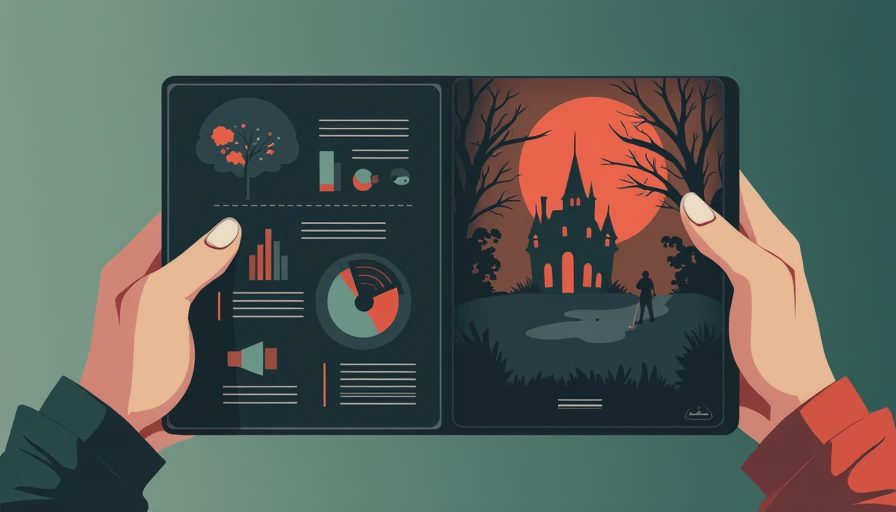
The best ps2 horror games manage attention, not just enemies
A common mistake is to measure horror by monster frequency. More enemies do not automatically create more fear. In fact, repeated attacks can teach the player a predictable rhythm. Once the rhythm is understood, the creature becomes a timing exercise.
Silent Hill 2 shows a different approach. Its spaces often delay confirmation. Radio static, distant sounds, obstructed streets, and unreliable visibility make the player spend attention before an encounter begins. The threat is partly an enemy and partly the cost of deciding whether the sound deserves investigation. The game repeatedly asks the player to forecast danger with incomplete data.
That same principle appears in Siren, where sight and information are deliberately unstable. Sightjacking gives the player access to other viewpoints, but it does not create comfort. It creates a more complicated map of danger. You can observe a threat, yet still need to understand patrol timing, cover, route order, and the limits of your own movement. More information does not always reduce fear. Sometimes it shows you how little control that information provides.
This is why ps2 horror games can feel slower than modern horror while producing sharper tension. Their pacing reserves attention. A quiet room is not empty content if the player is using it to reconstruct what happened in the last room and predict what the next transition might contain.
Resource pressure turns exploration into a calculation
Inventory design is another hidden engine. In many ps2 horror games, healing items, ammunition, keys, and save opportunities are not just rewards. They are permissions. They tell the player which risks can be absorbed and which risks should be avoided.
Consider the difference between carrying three healing items and carrying one. The character may have the same health bar, but the player’s behavior changes. With a surplus, combat becomes a reasonable shortcut. With one item, a minor hit can alter the entire route. The player may backtrack, search for a safer angle, or leave an optional room unexplored. A small resource change creates a large change in attention.
Forbidden Siren and Kuon use scarcity differently from a straightforward shooter. Avoidance, positioning, and route knowledge often matter more than damage output. In Resident Evil: Outbreak, uncertainty about allies and supplies makes a familiar objective feel unstable. The system encourages a player to remember not only where an item was found, but whether spending it solved a real problem or merely reduced discomfort.
Save design matters here too. A save room can function as a decompression chamber, but it can also become a strategic checkpoint. If saving is limited, distant, or tied to an item, the player carries the consequences of exploration farther. If saving is generous, tension moves elsewhere, usually into combat or navigation. Neither approach is universally better. The useful question is what kind of memory the game asks the player to maintain.

Sound is a prediction system
The strongest ps2 horror games use sound before they use spectacle. A footstep, radio burst, door impact, or change in ambient noise gives the player a model to test. The sound does not need to identify the threat. It needs to make the player ask whether the threat is moving closer, waiting, or irrelevant.
This is why a muted replay often feels mechanically different, not merely less atmospheric. Without audio, the player loses an early-warning channel. Visual scanning becomes more aggressive, and the player may turn the camera repeatedly. That behavior is evidence that sound was carrying navigational and predictive information.
Fatal Frame adds another layer by making the player face danger to respond effectively. The camera is an offensive tool, but using it requires attention and proximity. The system turns looking into exposure. That is an elegant horror loop: the action that gives the player control also asks the player to remain present with the threat.
What to notice when replaying these games
When I revisit ps2 horror games now, I use a short field checklist rather than asking whether they are still scary.
First, note every moment when the game removes a safe option. Is the character trapped, slow to turn, low on resources, or unable to see the exit? Second, record what information arrives before danger: sound, camera movement, environmental change, or enemy animation. Third, watch the recovery cost after an error. Does a missed attack cost health, position, ammunition, time, or all four?
Then compare the quiet sections with the encounters. If the quiet is only a pause between fights, the game may rely on spectacle. If the quiet asks you to remember routes and interpret signals, it is doing more complex work. Finally, pay attention to repetition. A repeated scare can lose force, but a repeated uncertainty can remain effective because the player never receives a complete rule.
Why these systems still matter
Modern horror games have cleaner cameras, richer audio, and more flexible controls. Those improvements are valuable, but they can also remove friction that once created dread. A perfect map, abundant checkpoints, and instant movement reduce the number of decisions that carry forward.
That does not make older design automatically superior. Some ps2 horror games are opaque, clumsy, or unfair, and nostalgia can disguise those problems. I used to make a version of this mistake: treating friction as depth simply because it made testing uncomfortable. The better analysis separates accidental inconvenience from meaningful restriction.
The most durable examples use limitation to shape attention. They make the player listen, remember, hesitate, and commit. The system is not hiding. It is speaking in a language most reviews do not translate. When a hallway still feels dangerous after many years, the reason may be less mysterious than it seems: the game has arranged information so that your next decision never feels completely safe.
No entries yet — sign the first.