The first time I searched for sandy stardew, I was not really looking for a character biography. I wanted to understand why a short visit to the Calico Desert can feel like a meaningful expedition, even when the destination contains only a shop, a casino entrance, and a dangerous cave. Sandy sits at the center of that sensation. She is not mechanically complicated, but her placement in the world makes several systems suddenly visible: bus access, daily schedules, inventory rotation, money pressure, and the player's appetite for risk.
I used to make a version of this mistake in design. I would treat an NPC as a container for dialogue and items, then wonder why players remembered some vendors and forgot others. Stardew Valley suggests a better approach. A character becomes memorable when the player must build a small routine around reaching them. Sandy is part of that routine, not merely a person standing behind a counter.
Why Sandy Matters More Than Her Dialogue Box
Sandy's shop, the Oasis, is located in the Calico Desert, which means the player cannot simply walk there from the farm. The bus must be repaired, and a bus ticket costs gold each way. That price is small enough to be accessible but large enough to create a decision. Do I go today for seeds, save the money for upgrades, or use the trip to enter Skull Cavern?
This is the first important design variable: access friction. The game does not lock Sandy behind a difficult conversation or a complicated quest chain. Instead, it places her behind distance and a transport fee. The result is a visit with a beginning, middle, and end. I leave the farm, spend resources to travel, combine several errands, and return before the day disappears. Even a simple purchase inherits the emotional weight of the journey.
The numbers are evidence. The experience is the conclusion. A shop with the same inventory in Pelican Town would feel like a menu. The same shop in the desert becomes a destination.
The Oasis Is a Controlled Interruption
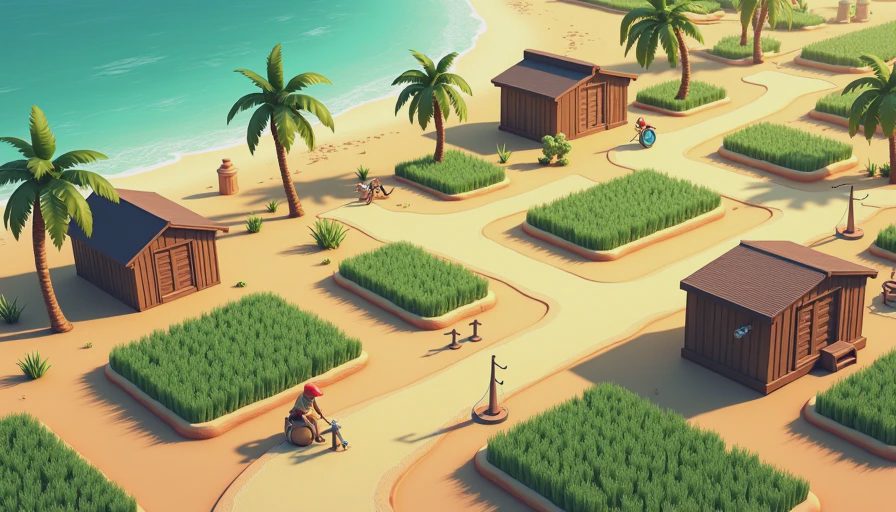
When studying sandy stardew, it is tempting to focus only on the items Sandy sells. That misses the more useful question: what does the shop interrupt? Stardew Valley normally encourages a predictable farm loop. Water crops, collect products, check machines, visit town, and sleep. A desert trip breaks that loop without completely destroying it.
The interruption is controlled because the player receives several possible rewards. Sandy can sell desert-themed seeds and goods that support a different farming plan. The desert itself offers access to foraging, fishing, mining, and combat. The Casino adds another layer of curiosity, whether or not the player engages with its games. One bus ride therefore connects multiple systems instead of serving one narrow purpose.
That connection helps the trip feel efficient after the player learns the map. A first visit may be exploratory. Later visits become scheduled runs: buy seeds, check the shop, enter Skull Cavern, and use the return trip to reassess the next day. The world has not become smaller. The player has built a mental shortcut through it.
Sandy Stardew and the Value of Scarcity
Sandy's inventory is useful partly because it is not the universal answer to farming. Her stock does not replace Pierre's shop or remove the need to plan around seasons. It creates a specialized reason to visit the desert. Specialized rewards are powerful because they give a location an identity without requiring a huge amount of content.
This is a lesson I would give to anyone designing a hub world: do not make every vendor equally convenient. Convenience is valuable, but total convenience flattens geography. When a player has to travel for a particular seed or resource, the item acquires a memory. I remember the trip, the bus fare, the weather on the farm, and whether I had enough time left to mine. The product is now attached to a place.
Sandy also benefits from scarcity in a second way. Her shop exists during a particular portion of the player's larger progression. Before desert access, she is a distant name. After the bus is repaired, she becomes part of a new economic tier. The same character changes meaning because the player's available routes have changed.
A Schedule That Makes the Desert Feel Alive
The phrase sandy stardew also appears in searches because players often want practical information: where she is, when the shop opens, and how to reach the desert. Those questions reveal something about schedule design. A character's hours are not just administrative data. They determine whether a plan survives contact with the game clock.
Stardew Valley gives the day a strong time pressure without turning every action into a panic. If I arrive too late, I have not failed a combat encounter. I have failed a plan. That distinction matters. The cost is usually measured in a missed purchase, wasted travel, or a shorter mining session rather than a game-over screen.
Sandy's schedule therefore teaches the player to bundle actions. The shop visit should not stand alone if the player has already paid to reach the desert. The best route might include buying from the Oasis, checking the desert for forage, entering the mines, and watching the clock. This is soft optimization: the game invites efficiency but leaves room for casual play.

Why the Character Feels Larger Than Her Mechanical Role
Sandy does not need a massive questline to feel distinct. Her visual setting, shop, voice, and location reinforce one another. She belongs to the desert, and the desert belongs to a different rhythm from the farm. That coherence does a lot of work.
In system terms, she is a landmark attached to a threshold. The player crosses from ordinary town access into a more expensive, more specialized region. Sandy provides a friendly face at that threshold. Her presence lowers the emotional cost of entering an unfamiliar space, especially before the player understands the desert's risks.
This is what I saw, and this is what I think it means: characters often become anchors for systems they did not personally create. Players say they are visiting Sandy, but they may really be engaging with the bus, the desert economy, Skull Cavern, seasonal planning, and the pressure of the clock. A memorable NPC gives those invisible systems a human shape.
What Designers Can Learn From Sandy Stardew
The clearest lesson from sandy stardew is that content volume is not the same as systemic importance. Sandy has a limited job, but that job sits where several loops overlap. Travel, spending, exploration, and time management all pass through her location.
A designer can reproduce that effect with a few deliberate choices. Put a useful service beyond a meaningful transition. Give the location one or two exclusive reasons to visit. Make the trip expensive enough to require planning, but not so expensive that players avoid it. Then add adjacent activities so the player can turn one errand into a route.
The design should also communicate enough information for planning. A player needs to learn where the vendor is, what she sells, and when the shop operates. Mystery can create curiosity, but missing schedule information creates irritation. Stardew generally keeps the rules discoverable through observation, conversation, and repetition.
That balance is why Sandy remains a good case study. She is not hiding a complicated algorithm. The system is speaking in a language most reviews do not translate: distance becomes value, a schedule becomes tension, and a shop becomes a reason to understand the whole map.
When I think about sandy stardew now, I think less about the character as an isolated NPC and more about the route she creates. The bus ride changes the shape of a day. The desert changes the value of money. The shop changes what counts as a productive trip. Sandy is memorable because the game lets her stand at the intersection of all three.
The next time you visit the Oasis, watch the clock and note what you planned before boarding the bus. Then compare that plan with what you actually did. That gap is where the design becomes visible. The numbers are evidence. The experience is the conclusion.



No entries yet — sign the first.