The first time a sprinkler changes a Stardew Valley morning, the effect is less about convenience than rhythm. You wake up, step outside, and discover that watering is already done. The sprinkler stardew valley system looks simple, but it quietly changes how you spend time, how you arrange space, and which crops feel worth growing. The numbers are evidence. The experience is the conclusion.
What each sprinkler actually does
The basic Sprinkler is available at Farming Level 2 and waters four tiles: the squares immediately above, below, left, and right of the machine. It costs one Copper Bar, one Iron Bar, and one Refined Quartz to craft. That recipe is not especially expensive forever, but early in a save file those materials compete with tool upgrades, mining progress, and other crafting goals.
The important detail is not simply that the basic sprinkler saves four watering actions. Its cross shape also creates awkward gaps. A machine placed in a regular field does not produce a clean block of watered soil. You can work around it, but the layout asks you to remember which corners still need attention. This is the first design lesson in sprinkler stardew valley: automation is only useful when its coverage matches the geometry of the task.
Quality Sprinklers arrive at Farming Level 6. Each one waters the eight surrounding tiles, creating a compact three-by-three pattern with the sprinkler in the middle. The recipe requires one Iron Bar, one Gold Bar, and one Refined Quartz. That is a much more meaningful upgrade because the coverage is symmetrical. Your field stops being a collection of exceptions and starts behaving like a repeatable grid.
Iridium Sprinklers unlock at Farming Level 9 and water 24 surrounding tiles. Their five-by-five footprint is powerful enough to support large crop fields, but they are not an early-game shortcut. An Iridium Bar, a Gold Bar, and a Battery Pack make each unit valuable. The right question is not whether they are the best sprinkler. They are. The question is whether spending rare materials now improves the rest of your farm or merely makes one season look cleaner.
Why placement changes the feel of a farm
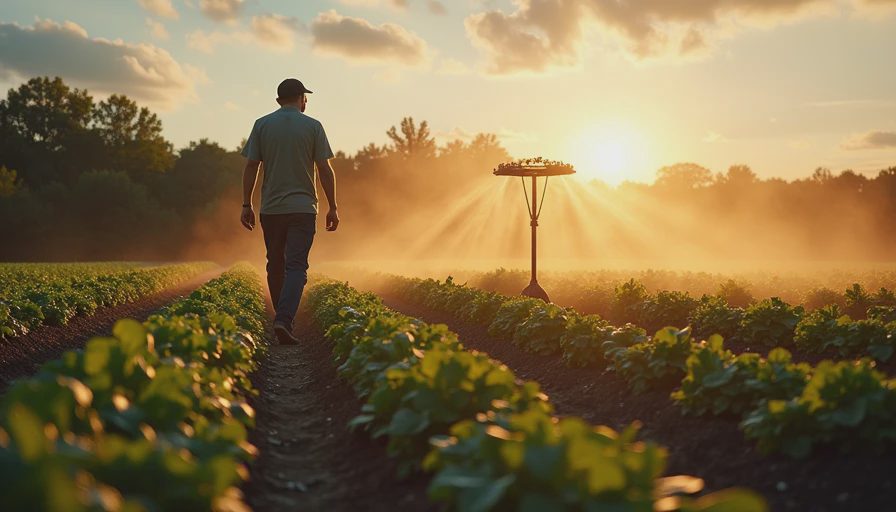
When I examine a farm layout, I start with movement rather than maximum crop count. A theoretically efficient field can still feel bad if the player must squeeze through narrow paths, step around machines, or break planted crops to reach a chest. The sprinkler stardew valley layout is therefore an information system. It tells you where to walk, where harvesting is possible, and which spaces are intentionally reserved.
A Quality Sprinkler rewards a simple pattern: place it in the center of a three-by-three crop area, then leave walking lanes between groups. For example, four sprinklers can support 32 surrounding crop tiles while leaving a readable structure. You lose a little theoretical density compared with filling every square, but you gain predictable access. That trade is often worth more than a handful of additional parsnips.
Iridium Sprinklers create a similar decision at a larger scale. A five-by-five crop block is impressive, but several blocks placed without paths turn the farm into a maze. I used to make a version of this mistake in systems work: optimize the output variable, then wonder why the interaction feels hostile. In Stardew Valley, the missing variable is usually attention. A player has to harvest, replant, collect machines, check animals, and leave before the day becomes expensive.
The time economy behind automation
Watering crops by hand is not difficult in isolation. It is costly because it occupies the first part of every morning. A large field can consume many in-game minutes, and those minutes have alternatives: fishing, mining, gift runs, foraging, or processing goods. The sprinkler stardew valley upgrade is really an investment in optionality. It does not just remove work; it lets you choose different work.
This is why a small number of Quality Sprinklers can feel better than a badly planned field full of basic ones. Basic units reduce labor, but their cross pattern forces frequent inspection. Quality units reduce both labor and uncertainty. Once the coverage is visible, the player can make a quick pass through the field and trust the pattern. Trust is a resource in farming games, even when it is never shown on the interface.
There is also a seasonal consideration. A sprinkler placed on the final day of a season does not provide much value unless it supports a crop that survives the transition or a planned replanting schedule. Likewise, a large investment in Iridium Sprinklers can be delayed if the next upgrade, building, or tool would unlock more options. The best automation is the automation that arrives before the repeated task becomes a source of friction.
A practical progression from early game to late game
For the first spring, I would not build a field around the basic sprinkler unless the materials appear naturally through mining. Use a few units as labor-saving anchors, then keep enough open soil for hand watering. This hybrid arrangement is less elegant, but it avoids spending your entire early resource budget on a pattern you will soon replace.
At Farming Level 6, redesign around Quality Sprinklers instead of adding them randomly to the old field. Clear a section, mark paths, and build rectangular crop zones. If you already have crops planted, wait for the season change when possible. Rebuilding at the wrong moment creates unnecessary lost harvests and makes the upgrade feel worse than it is.
At Farming Level 9, treat Iridium Sprinklers as infrastructure. They are especially effective in large fields, greenhouse layouts, and spaces where every morning movement matters. Pressure Nozzles can further increase coverage when available, but they should support a layout that already works. Expanding a confusing pattern only makes the confusion larger.
What the mechanic teaches about game design
The sprinkler stardew valley system is a small example of layered progression. The first version teaches the idea of coverage but leaves visible imperfections. The second version communicates a clean pattern and arrives after the player understands why automation matters. The third version expands capacity without changing the basic mental model. Each upgrade reduces labor while preserving a relationship between cost, space, and planning.
That pacing also protects the game’s early tension. If the first sprinkler covered a large field, watering would disappear before the player had formed a routine. If no sprinkler existed, crop farming would remain a chore rather than becoming a planning problem. The progression places automation between those extremes. It gives the player a reason to mine, farm, and improve skills without demanding a single correct route.
This is what I saw, and this is what I think it means: the system is not hiding. It is speaking in a language most reviews do not translate. Coverage radius is the visible rule. The deeper rule is how much attention the game asks you to spend on maintenance.
A layout checklist that survives real play
Before placing a new sprinkler, look at the walking route from your farmhouse, chest, and field entrance. Leave paths wide enough for harvesting without awkward turns. Group machines by coverage rather than sprinkling them across empty soil. Count the tiles that will actually hold crops, not just the tiles inside a theoretical square.
Next, compare the material cost with your next bottleneck. If watering takes five minutes but mining is blocking tool upgrades, more sprinklers might not be the best use of time. If watering takes half the morning and prevents you from reaching the mines, the same recipe becomes much more valuable. The answer depends on the pressure your current farm creates.
Finally, test the layout for one in-game week. Watch where you pause, where you walk around machines, and which crops remain unreachable. The sprinkler stardew valley experience improves when the arrangement is legible at a glance. Efficiency is not only the number of crops watered. It is the amount of thought required to use the farm.
A good farm eventually makes its own priorities visible. Basic Sprinklers introduce the tradeoff, Quality Sprinklers establish structure, and Iridium Sprinklers turn that structure into capacity. Choose the upgrade that removes your current friction, not the one with the largest number. That is how automation creates flow instead of another project to maintain.





No entries yet — sign the first.