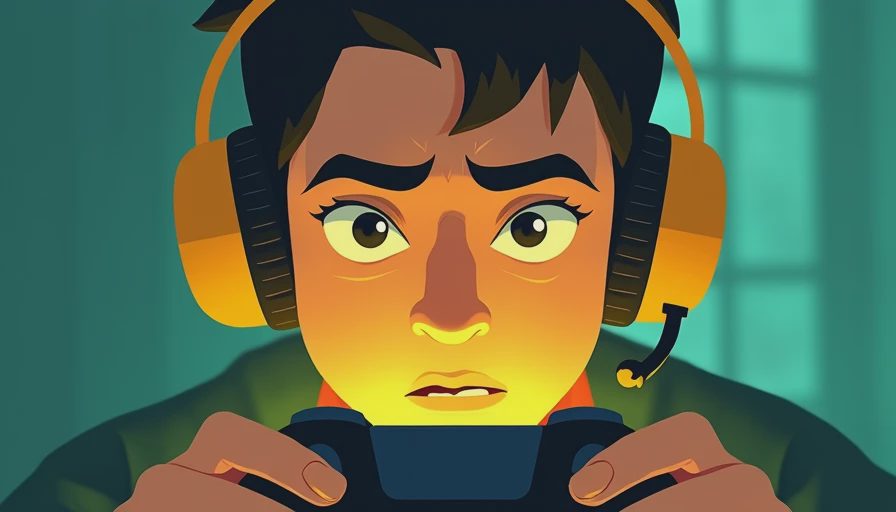
The first thing I notice in co op horror games is not the monster. It is the moment a group stops speaking clearly. Someone has seen movement near the stairs, another player is checking an inventory, and the third is already opening a door nobody discussed. Fear arrives through a breakdown in shared information before it arrives through a jump scare. The numbers are evidence. The experience is the conclusion.
I used to think cooperative horror mainly meant adding enemies to a game that already worked alone. That explanation is too simple. Multiplayer changes the information economy, the cost of failure, and even the meaning of distance. A corridor feels different when a friend is ten seconds behind you, carrying the only useful tool.
Why co op horror games create different tension
In a single-player horror game, the designer controls what the player knows with considerable precision. A sound can be timed against a door animation, a camera angle, or a scripted interruption. In co op horror games, that control becomes indirect. Players generate noise, reveal secrets early, split up, and warn one another about threats. The designer is no longer composing every beat. The designer is building conditions under which players compose bad decisions themselves.
That distinction explains why a quiet room can be more frightening than a chase. If everyone understands where the threat is, the problem becomes tactical. If one player hears a sound but cannot identify its direction, the group begins negotiating. “Did you see that?” is not flavor text. It is a request for a better map of the system.
The useful variables are surprisingly concrete: voice distance, line of sight, door states, resource ownership, respawn timing, and the amount of information shared automatically. A game that places a large objective marker over every teammate reduces uncertainty. A game that shows only a name through walls preserves it. Neither approach is universally correct, but they produce different kinds of fear.
Distance is a pressure gauge
The most important spatial rule in co op horror games is often not the size of the map. It is how quickly a separated player can become relevant again. If a teammate can cross the space in five seconds, splitting up feels productive. If reconnection takes forty seconds and the route contains locked doors, separation becomes a genuine risk.
I think of distance as a pressure gauge with three zones. At close range, players share information too easily and threats become manageable. At medium range, each player knows that help is possible but not guaranteed. At long range, the group may as well be playing separate games. The interesting zone is the middle one, where a player can hear a teammate in trouble but cannot immediately solve the problem.
This is why games such as Phasmophobia can make a doorway feel like a systems boundary. The player outside may possess a radio, a camera, or a partial clue, while the player inside has direct contact with the space. Their roles are unequal, but both have useful information. Good co op horror games turn that asymmetry into conversation rather than busywork.
Information is a shared resource
A useful way to analyze co op horror games is to treat information like ammunition. A player can spend it by calling out a monster location, preserve it by staying quiet, or distort it accidentally through panic. Voice chat then becomes part of the interface. The group is not merely communicating around the game; it is operating one of the game’s most important systems.
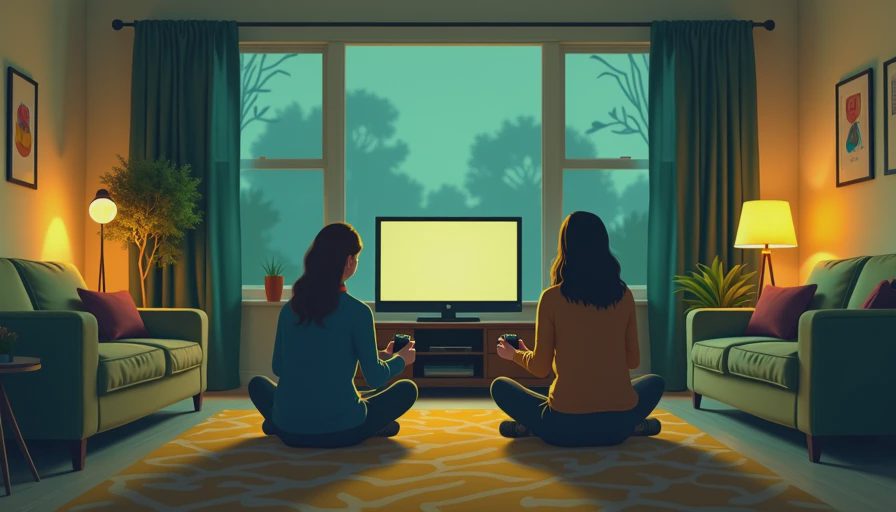
Consider a simple example. One player finds a key but cannot carry it because their inventory is full. A second player knows the route back to the locked door. A third player has seen the creature nearby. The best decision is not obvious because the relevant resources are distributed across people. The game has created a small coordination puzzle without presenting a puzzle screen.
Some co op horror games weaken this structure by giving everyone identical tools and perfect markers. That can improve accessibility and reduce frustration, but it also removes the need to ask who knows what. Other games hide too much, turning communication into guesswork. The strongest designs provide partial, dependable signals: a flickering light, a directional audio cue, or a door that remains open after someone passes through it.
Failure should change the group
Death in co op horror games is not only a health-state change. It changes the social shape of the session. One player may enter a spectator mode, lose access to key information, or become a ghost who can influence the environment. These choices determine whether failure creates suspense or simply sends someone to their phone.
The cost of failure must be readable. If a mistake loses five minutes of progress, players may accept the risk. If it erases an hour without warning, they become conservative and stop exploring. This is not a moral judgment about difficulty. It is a feedback problem. Players need to understand what their caution is protecting and what their curiosity can buy.
A strong failure loop also gives the remaining players a reason to care about the eliminated teammate. An absent player who can mark a location, manipulate a light, or reveal a narrow clue still has a role. The role should not be powerful enough to remove danger, but it should preserve attention. I have seen sessions recover from a death because the dead player became a source of uncertain information rather than a spectator.
The monster is a coordination test
In co op horror games, enemy behavior matters less as a spectacle than as a test of group assumptions. A monster that always targets the loudest player teaches the team to control noise. One that tracks the last known position teaches route discipline. One that can imitate a teammate’s voice attacks trust directly.
The key question is whether the enemy communicates its rule. It does not need to explain the rule in text, but players should be able to compare events and form a hypothesis. If the monster ignores a player for reasons nobody can infer, the experience feels random. If it follows a predictable rule with enough exceptions to create uncertainty, the group starts investigating.
This is where many co op horror games become accidental system laboratories. Players test whether hiding works, whether doors delay pursuit, and whether reviving a teammate makes noise. They are not simply trying to win. They are identifying thresholds. The system is not hiding. It is speaking in a language most reviews do not translate.
How to evaluate the fear loop
When I analyze co op horror games, I do not begin with a ranking. I watch for four transitions. First, how does the group receive an incomplete threat signal? Second, what information must be shared verbally? Third, what resource or position makes the decision costly? Finally, how does the game remember the decision afterward?
You can test this with a simple session note. Record the moment the group first identifies danger, the first time players split apart, and the point when someone stops exploring. Then compare those moments across two or three rounds. If the same behavior keeps producing tension, the design probably has a stable pressure loop. If the fear disappears once players learn one safe exploit, the threat depended on uncertainty rather than robust behavior.
That does not make the game bad. Some horror is built around discovery and surprise. Other horror is built around repeated pressure, where the rules remain dangerous even after they are understood. The important distinction is knowing which experience the mechanics support.
The best co op horror games do not make players helpless at every moment. They give the group enough agency to plan, then introduce a cost that makes planning incomplete. Someone has the key. Someone else has the map. The creature is between them. That small gap between knowledge and control is where the fear lives.




No entries yet — sign the first.