The first time a friend goes silent in a dark corridor, the fear does not come from the monster alone. It comes from missing information. You cannot see what they see, and their sudden silence becomes a signal. Coop horror games understand this pressure better than many single-player horror games because they turn communication itself into a resource. A whispered warning, a bad callout, or a teammate who runs in the wrong direction can change the entire shape of a room.
I used to think cooperative horror worked mainly because shared reactions are funny. That is true, but incomplete. The stronger explanation is mechanical: these games distribute knowledge, movement, risk, and responsibility across several people. The numbers are evidence. The experience is the conclusion.
Why coop horror games create tension through information
Fear needs uncertainty, but multiplayer usually reduces uncertainty. A second player can watch a doorway while you search a desk. They can confirm that the hallway is clear. They can carry an item you forgot. If every player has the same information, the horror system loses one of its best tools.
The most effective coop horror games solve that problem by creating uneven information. One player may have the flashlight while another holds the map. A radio may work only at short range. A character may hear an audio cue that others cannot hear. In Phasmophobia, for example, equipment and evidence gathering divide attention even when the whole group occupies the same location. In Lethal Company, the player outside the facility can interpret a monitor while the team inside deals with darkness and creatures.
This arrangement produces a useful contradiction. Players are safer together, but they are rarely equally informed. The group has more capability than one character, yet each individual has a partial model of the situation. That is why a simple sentence such as “I think it is behind you” can create more panic than a loud musical sting. The statement transfers uncertainty instead of resolving it.

Distance is a hidden difficulty slider
Many coop horror games make distance matter without displaying a difficulty meter. Separation can be created by a locked door, a long staircase, a broken elevator, or a limited voice channel. The important variable is not just how far apart players are in world units. It is how long one player must wait before help can arrive.
Imagine a teammate being attacked. If assistance takes two seconds, the event feels like a quick reaction test. If assistance takes twelve seconds, the same enemy becomes a judgment about route planning. Do you abandon the objective? Do you trust the injured player to kite the creature? Do you risk making noise while crossing the map? The enemy has not necessarily become faster or stronger. The team’s response window has become smaller.
This is one reason games such as GTFO feel different from casual haunted-house experiences. The threat is connected to movement, ammunition, sound, and formation. A group that spreads out covers more ground but loses mutual support. A group that stays close can respond quickly but may trigger multiple problems at once. The system turns physical spacing into social pressure.
I used to make a version of this mistake in system prototypes: treating distance as scenery rather than as a timing rule. Players read space through expected help. A hallway is frightening when the player knows that help exists but cannot arrive soon enough.
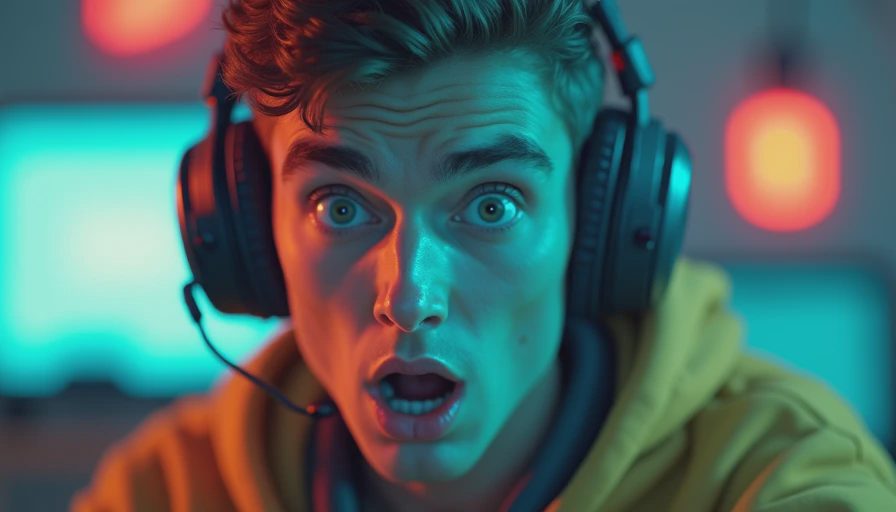
The voice channel is part of the horror design
In coop horror games, voice communication is not merely a convenience layered over the real game. It is often one of the game’s primary interfaces. Proximity chat, radio static, restricted visibility, and deliberate noise can make speech carry risk.
A proximity system creates a clear tradeoff. Staying quiet preserves stealth, but silence also prevents coordination. Speaking loudly may attract attention, yet remaining silent forces teammates to guess. The result is a feedback loop: fear makes players speak less clearly, unclear speech creates mistakes, and mistakes generate more fear.
The best examples do not need to forbid communication entirely. They only need to make communication imperfect. A player might hear a warning after an enemy has already moved. Someone may call out a room number incorrectly while fleeing. A joke can cover the sound of a critical cue. These are not scripted betrayals. They are failures in the information pipeline.
That distinction matters. A jump scare asks the player to react to an authored event. A communication failure asks the group to interpret one another under stress. The second event can feel personal because the mistake belongs to the team. Nobody needs to be blamed, but everyone remembers who said the door was safe.
Failure becomes a group negotiation
Death in a solo horror game is usually a private reset. In coop horror games, failure has a social cost. One player may lose equipment, another may lose time, and the remaining team may have to decide whether to rescue them or continue. Even when the game respawns everyone quickly, the group has to reconstruct trust.
This makes revive systems especially important. A revive that takes one second encourages routine rescue. A revive that requires a long interaction in an exposed area creates a secondary objective. The downed player becomes both a victim and a threat amplifier because their location pulls attention toward danger.
Good failure systems also avoid making one mistake permanently boring for everyone else. If a dead player can watch cameras, control a weak ghost, mark items, or provide limited information, they remain involved without removing the cost of death. Content from the eliminated player should be useful but incomplete. Perfect surveillance would erase the fear that the living players are meant to feel.
The social layer can be measured in small behaviors. Do players stop to recover someone? Do they split supplies fairly? Does the team become quieter after a bad call? I cannot claim that every one of these outcomes was intended by a developer, but they are observable consequences of the rules.
What to look for when analyzing coop horror games
When I examine coop horror games, I start with the player sensation and work backward. If the group says a mission felt oppressive, I ask when that feeling began. Was it caused by a low resource count, a long route back, a missing teammate, or uncertainty about the enemy’s location?
Then I isolate the variables. Record how long it takes to reach a teammate, how far voice chat carries, how many safe hiding places exist, and whether enemies react to speech, light, doors, or running. These measurements do not explain everything, but they prevent vague criticism. “The game felt unfair” becomes more useful when paired with “the enemy could detect a player through two closed doors, while the warning sound played after the escape route was blocked.”
Compare runs with one controlled change. Keep the map and objective similar, but alter the team’s formation. Send one player ahead, then keep the group together. Use voice chat constantly, then restrict callouts to short phrases. The point is not to turn play into laboratory work. It is to reveal which rules are carrying the sensation.
That is the real lesson of coop horror games: fear is not only an enemy, a soundtrack, or a dark room. It is a shared model of danger breaking apart under pressure. Once players cannot agree on what is happening, every hallway becomes a negotiation. This is what I saw, and this is what I think it means. The system is not hiding. It is speaking in a language most reviews do not translate.





No entries yet — sign the first.