The first time a virtual hallway makes me hesitate, I am usually not reacting to the graphics. I am reacting to the room around me. A real wall is close behind my shoulder, a virtual doorway sits three steps ahead, and the game has quietly turned my body into part of its interface. That is the central appeal of location based vr experiences: space is no longer just scenery. It becomes a rule the player can feel.
I used to think immersion came mostly from visual fidelity and low latency. Those matter, but they are only the visible layer. In location based vr experiences, designers also control walking distance, turning radius, sightlines, group spacing, physical props, and the timing of interruptions. The numbers are evidence. The experience is the conclusion.
Why location based vr experiences feel different
A living-room VR game has to assume that the player may have two meters of safe space, a coffee table, and someone’s dog moving through the play area. A location-based installation can design around a known floor plan. That changes the design problem completely. The developer can place a physical door where the virtual door appears, use a real staircase as a transition, or guide a group through several rooms without loading screens that break the fiction.
This does not automatically make the experience better. It makes the relationship between physical and virtual space more deliberate. In a headset, I can see a giant underground facility. In a location-based venue, I might also touch a metal railing, hear machinery from a speaker hidden nearby, and feel another player pass within arm’s reach. Each signal confirms the others. The system is not hiding. It is speaking in a language most reviews do not translate.
The strongest examples use constraints rather than pretending they do not exist. A narrow physical corridor can become a maintenance tunnel. A marked waiting area can become an elevator platform. A staff member’s safety instruction can be reframed as a mission briefing. When location based vr experiences succeed, the practical requirements of the venue are absorbed into the fiction instead of placed beside it.
The hidden variables: movement, attention, and trust
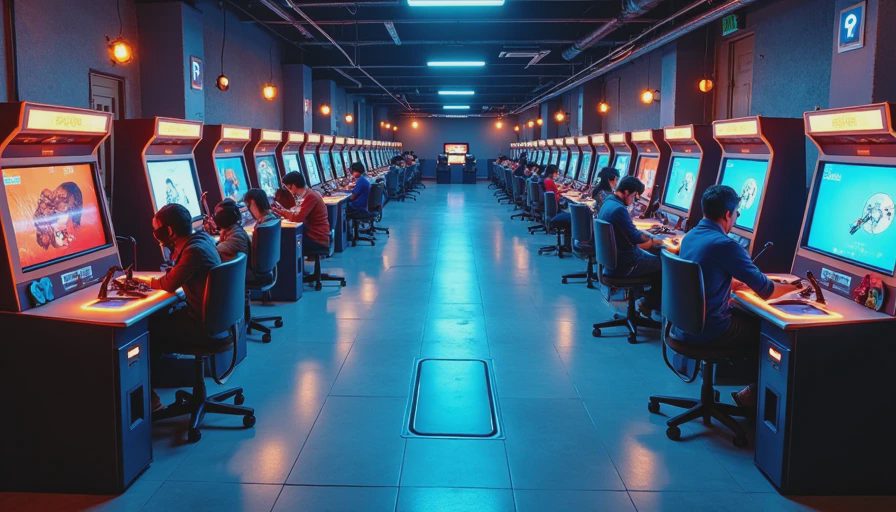
The most important variable is not room size. It is how the experience manages attention. If a player must remember where a real wall is, the virtual world loses authority. If a guide gives too many instructions, the player stops exploring and starts following procedures. Good location based vr experiences create a narrow channel between freedom and supervision.
I would measure that channel with simple observations. How often does a player turn around to check the real room? How long does it take to cross from one landmark to another? Does a player understand where the next objective is without a verbal prompt? Where do groups bunch together? These observations do not explain everything, but they reveal friction that a conventional playtest may miss.
Tracking also changes the design of failure. In a home game, missing a jump might cost health or time. In a physical venue, a failed action can create a collision, confuse the next player, or interrupt the whole group’s rhythm. Designers therefore use larger interaction zones, generous timing windows, and visual affordances that are readable from several angles. That can make the experience feel less mechanically strict, but the tradeoff is intentional. Physical safety and social flow are part of the difficulty curve.
How groups change the game
Many location based vr experiences are built for teams, and a team creates information problems that a solo game never has. One player may see a symbol that another player needs. Someone near the back may miss the guide’s gesture. A confident participant can accidentally solve every interaction while the rest of the group becomes an audience.
The best systems distribute attention. Separate players receive complementary clues. Doors require two people to act at once. Sound cues pull the group toward a shared landmark, while individual interfaces provide smaller tasks. This is not simply cooperation added to a single-player design. It is a form of crowd choreography.
The designer must also account for dead time. If one person is solving a panel for ninety seconds, the others need something meaningful to observe, discuss, or manipulate. Otherwise the experience develops a queue, and queues feel like venue operations rather than adventure. A well-tuned scene gives the waiting players partial information without making the active player irrelevant.
Physical props are more than decoration
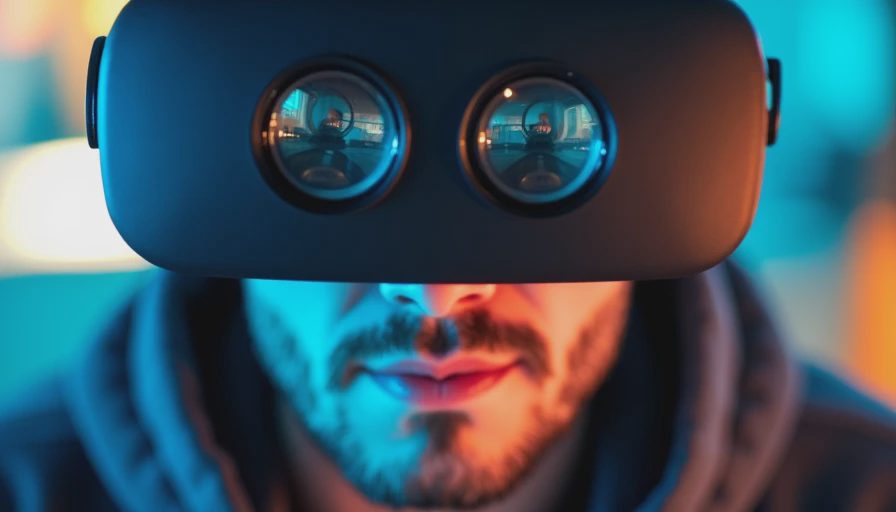
A physical prop earns its floor space when it changes player behavior. A real flashlight can make a player turn their body instead of moving only a virtual camera. A weighted tool can slow an action enough to create anticipation. A wall-mounted control panel can establish a stable reference point that helps the player understand orientation.
But physical objects introduce synchronization problems. If the virtual version is slightly offset, the mismatch becomes more noticeable than a missing prop would have been. A virtual handle that appears two inches away from the real handle can make the whole room feel unreliable. This is why alignment, calibration, and reset procedures matter as much as the asset itself.
I have seen this mistake in smaller form when designing interfaces: adding feedback because it seemed immersive, without asking whether the feedback clarified the action. A prop should answer a question. What can I touch? Where should I stand? What changed because I acted? If it answers none of those, it is probably scenery with maintenance costs.
Pacing, resets, and the cost of repetition
A venue cannot treat every session like a private game save. Equipment needs cleaning, batteries need charging, software needs to return to a known state, and the next group must receive a clear briefing. Those operational limits shape the narrative rhythm. A ten-minute reset may encourage short, self-contained scenes. A rapid turnaround may favor reusable props and fewer branching states.
That does not mean location based vr experiences have to be simple. Complexity can live in timing, spatial composition, and group roles instead of a sprawling state tree. A scene can feel different on a second visit if the player notices a hidden audio layer, chooses a different route, or takes responsibility for a different tool.
The reset is also a trust test. If a door fails to open, staff intervention should feel quick and comprehensible. If tracking drifts, the correction should not make the player wonder whether they caused the problem. Players forgive a technical issue more readily when the system communicates what happened and what will happen next.
How to analyze an experience without reducing it to a score
When I examine location based vr experiences, I start with the sensation rather than the feature list. Did the room make me feel exposed, crowded, powerful, or disoriented? Then I look for the variables that could have produced that feeling: distance, lighting, sound direction, avatar visibility, movement speed, interaction timing, and the number of simultaneous instructions.
I also separate observation from inference. I can record that three players stopped at the same doorway. I can hypothesize that the doorway lacked a clear affordance. I cannot claim that was the designer’s intention without stronger evidence. Another explanation could be that the previous scene directed attention elsewhere.
That restraint matters because the medium is still evolving. Some location based vr experiences will discover elegant ways to use physical architecture. Others will simply put a headset in a large room and call the room a feature. The difference is not the size of the venue or the price of the hardware. It is whether space participates in the game’s feedback loop.
For players, the useful question is simple: what did my body know before my conscious mind caught up? For designers, the harder question follows: which parts of that knowledge were authored, and which were accidents? Answering both is where the real archaeology begins.



No entries yet — sign the first.