The first time I put on a vr set after a long break, I expected spectacle. I got something more revealing: a sudden awareness of my own head, hands, and hesitation. A doorway in a game was no longer just a textured rectangle. It occupied a place in the room. I leaned toward it before I had decided to move. That tiny motion is where the interesting work begins.
A vr set does not create immersion by itself. It creates a tighter relationship between player movement, camera movement, sound, and consequence. When those systems agree, the world feels present. When they disagree, the illusion becomes a software interface strapped to your face. The numbers are evidence. The experience is the conclusion.
Presence begins with a timing problem
In a traditional game, the camera is usually an obedient tool. I move a stick, the view rotates, and the game gives me a predictable response. With a vr set, the player can turn their head independently of the character, so the system has to reconcile two kinds of motion. Head tracking needs to feel immediate, while locomotion needs to remain understandable and comfortable.
This is why latency matters so much. If I turn my head and the image follows a noticeable fraction of a second later, my body receives conflicting information. My eyes report rotation; my inner ear reports something slightly different. Even when I cannot name the delay, I feel it as strain or unease. Good VR design treats responsiveness as a comfort mechanic, not merely a technical achievement.
The same principle applies to interaction. If I reach for a virtual handle, the hand pose, collision volume, sound, and object movement need to agree closely enough that I stop checking the machinery. A useful test is to perform the action without looking directly at it. If the result remains legible, the system is doing more than displaying an object. It is teaching my body a rule.
The body is part of the control scheme
A vr set changes what counts as a button press. In a controller game, the designer knows where my thumb is and can build around a small, repeatable input. In VR, the player might reach, crouch, lean, point, or simply look. That larger vocabulary creates expressive possibilities, but it also creates ambiguity.
Consider a locked cabinet. A flat-screen game can place a prompt beside it and wait for a button. A VR game might ask me to grab the handle, pull it, and inspect the contents. That sequence feels more physical, but each action introduces a possible failure point. Is the cabinet locked? Did my hand miss? Is the grab zone too small? Did I use the wrong angle? A designer has to communicate those distinctions through sound, resistance, animation, and object placement.
I used to make a version of this mistake: treating physical interaction as automatically more immersive. It is not. Reaching for ten decorative objects can become tedious faster than pressing one button. Physicality earns its place when it gives the player useful information or creates a meaningful risk. Otherwise, it is just extra labor.
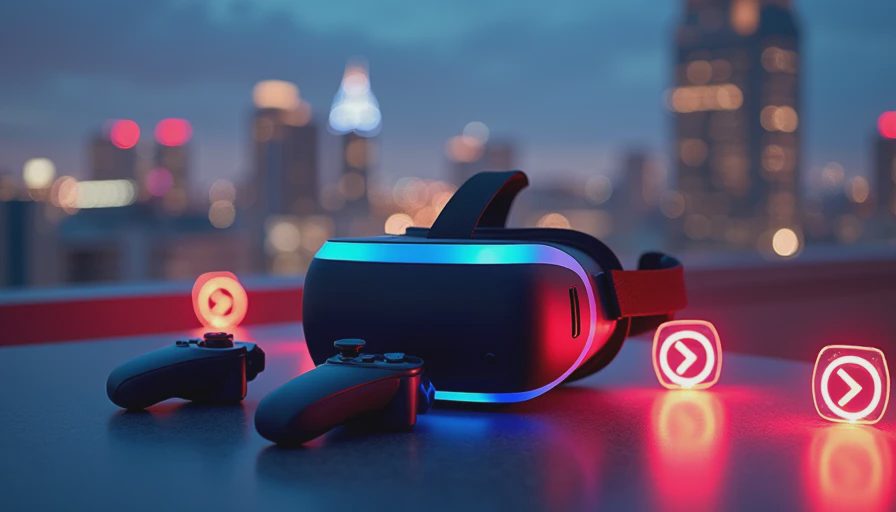
Room-scale space creates another hidden variable. A virtual hallway may be twenty feet long, while the player has only six feet of safe floor. Teleportation solves the physical mismatch but changes the rhythm of movement. Smooth locomotion preserves continuity but can cause discomfort. A vr set therefore turns level design into a negotiation between fictional distance and real furniture.
Comfort is an authored experience
Comfort settings are often presented as accessibility options sitting outside the main design. In VR, they affect pacing, navigation, and even the emotional meaning of a scene. Snap turning can make a player feel less physically exposed. A vignette during movement can reduce visual motion at the cost of narrowing attention. Teleportation can make exploration safer while making a chase feel less like continuous flight.
None of these choices is universally correct. The important question is whether the game communicates what the body should expect. Sudden camera acceleration is not frightening in the same way as a slowly approaching enemy. One creates discomfort; the other creates tension. If a vr set makes me physically brace before entering a dark room, that reaction is valuable. If I am bracing because the camera keeps drifting, the system has spent the player’s trust on a technical problem.
I look for transitions when examining comfort. Does the game move from standing to climbing without warning? Does a cutscene take control of my view? Does an elevator preserve a stable horizon, or does it add unnecessary visual movement? These details are small in a design document and enormous inside the headset.
Feedback makes virtual objects believable
Haptics are often discussed as if stronger vibration automatically means better immersion. My experience is the opposite. Feedback works when it has a clear relationship to an event. A short pulse for a button press, a different texture for a weapon impact, and resistance at the edge of a control can teach the player what happened without requiring a floating label.
Sound carries much of this burden. A drawer scraping open tells me that I moved it. A muted click tells me that I did not. Spatial audio can direct attention before the player sees the source, which makes the environment feel larger than the visible scene. But audio must remain consistent. If every object produces the same confirmation sound, the signal becomes decoration.
The best vr set experiences use redundant but non-identical cues. Visual motion, controller vibration, sound, and physical positioning each provide part of the explanation. They do not need to shout together. They need to agree. When one cue conflicts with the others, I start searching for the interface rather than inhabiting the world.
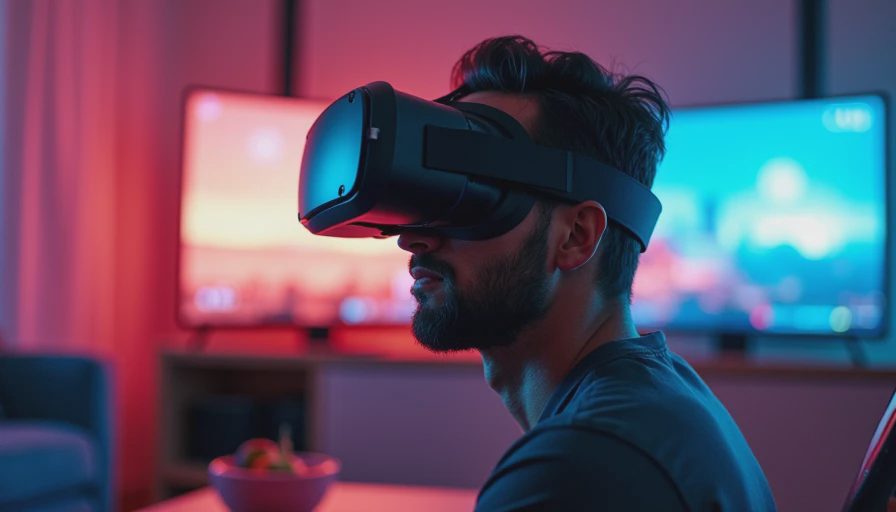
How to analyze a VR system without guessing
When I study a VR mechanic, I begin with a felt question rather than a feature list. Why did that room feel tense? Why did climbing feel tiring? Why did a simple inventory action interrupt the flow? Then I isolate the variables.
For movement, I compare teleportation, smooth travel, and short real-world steps. I note acceleration, turning method, camera behavior, and the distance between decisions. For interaction, I repeat the same task with different object sizes and hand positions. I record what the game communicates through animation, sound, haptics, and failure states. This is not a laboratory result, and I do not pretend one player session proves universal truth. It is a controlled observation that makes the next question sharper.
A useful comparison is between a virtual bow and a virtual door. The bow asks for alignment, timing, and release. The door asks for approach, grasp, force, and direction. If both actions feel satisfying, they probably share a readable relationship between intention and result. If one feels slippery, the problem may be the collision model rather than the animation.
The system is not hiding. It is speaking in a language most reviews do not translate.
What players should notice next time
The next time you use a vr set, notice the moment you stop thinking about the headset. What caused that shift? Was it stable tracking, a convincing sound, a hand pose that matched your intention, or a movement option that respected your comfort? Then notice the moment the illusion breaks. Did an object fail to grab? Did a cutscene rotate your view? Did the world ask for a physical action that added no meaningful choice?
Those observations are more useful than calling a game immersive or not immersive. They identify the machinery behind the feeling. They also explain why two games using similar hardware can produce completely different experiences. One treats the player’s body as a source of information. The other treats it as a novelty button.
A good vr set is therefore less about visual resolution than agreement. The screen, tracking, input, audio, level geometry, and comfort options must all point toward the same interpretation of action. When they do, I do not feel that I am operating a simulation. I feel briefly responsible for what happens inside it. That is the deeper achievement: not spectacle, but trust built one responsive moment at a time.



No entries yet — sign the first.