Psychological survival horror games rarely frighten me because a monster looks grotesque. The stronger effect comes later, when I am walking through an apparently empty hallway and realize the game has trained me to distrust empty space. I start counting doors, listening for changes in the room tone, and wondering whether the last safe room was actually safe. That sensation is not accidental magic. It is produced by systems: information delay, restricted control, encounter spacing, sound design, and the careful management of player attention.
I used to think horror tension came mostly from content. Put an enemy behind a door, add a sharp musical sting, and the player reacts. Then I spent more time examining psychological survival horror games and noticed that the most effective scenes often do less. They withhold confirmation. They make movement slightly costly. They let the player imagine several threats while showing only one. The numbers are evidence. The experience is the conclusion.
Fear begins with incomplete information
A conventional action game usually rewards quick interpretation. You see an enemy, identify its weakness, and choose an efficient response. Psychological survival horror games reverse that exchange. The game gives you partial information, then makes every decision feel expensive.
Consider a locked corridor. You do not know whether the key is nearby, whether returning will trigger an encounter, or whether the sound behind you was a scripted cue or a real enemy. None of those questions needs a complicated answer. The important part is that the player cannot confidently resolve them at once.
This is where uncertainty becomes a resource. A designer can control how much the player sees, how clearly an audio cue identifies its source, and how long the game waits before confirming a suspicion. If a noise is explained immediately, it becomes information. If it remains unresolved for three minutes while the player crosses two rooms, it becomes pressure.
That pressure also changes how players move. I stop taking the shortest route. I check corners that contain nothing. I pause before opening doors, even when the animation cannot be interrupted. The system is not hiding. It is speaking in a language most reviews do not translate.
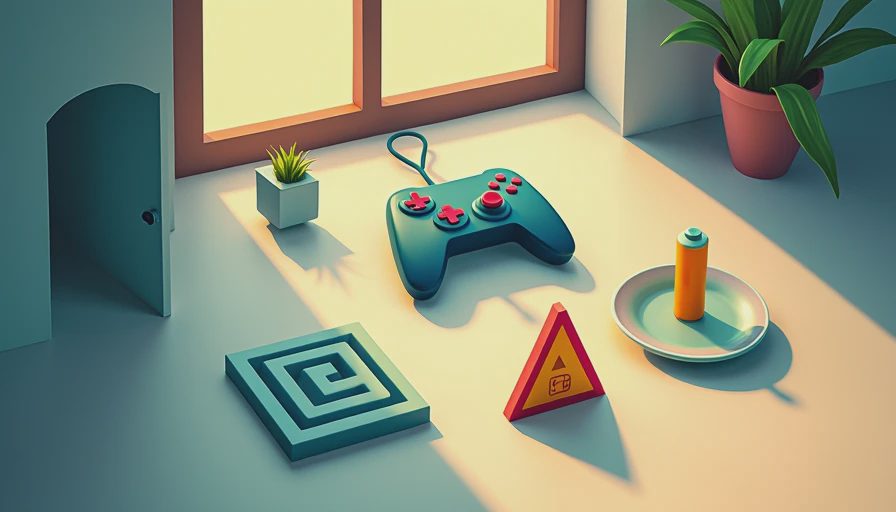
Control friction is not the same as bad controls
One of the easiest mistakes is to describe every awkward movement system as poor design. Sometimes it is poor design. Sometimes the friction is doing specific psychological work.
A slow turn rate, limited sprint duration, or deliberately narrow aiming window can make an enemy feel more dangerous without increasing its damage. The player is not simply weaker; the player has fewer reliable options. That distinction matters. If an enemy kills me because its attack is unreadable, I feel cheated. If I understand the attack but cannot safely reposition forever, I feel threatened.
The best psychological survival horror games make this limitation legible. Resident Evil 2 uses inventory pressure, ammunition scarcity, and deliberate movement to make preparation matter. Alien: Isolation builds tension around detection risk and escape routes rather than constant combat. Amnesia: The Dark Descent makes observation itself dangerous by turning attention toward the environment while discouraging prolonged exposure to threats.
These games are not necessarily asking for mastery in the same way a character-action game does. They are asking me to make a judgment with incomplete tools. I can fight, hide, run, or wait, but every option has a cost. I used to make a version of this mistake: adding more enemy power when the real problem was that the player already had too many safe answers.
Sound creates threats before enemies appear
Visual information is usually treated as the primary channel, but psychological survival horror games often build their strongest encounters through sound. A footstep behind a wall creates a wider threat field than a visible enemy. A distant scrape can occupy my attention while I search an otherwise ordinary room.
The key variable is not volume. It is source uncertainty. If I can instantly locate a sound, I can convert it into a route. If the game gives me a low mechanical groan with no clear distance or direction, I begin constructing possibilities. The sound becomes larger than the object that produced it.
Silence works the same way. A repeated ambient noise establishes a baseline. When that noise stops, I notice the absence before I understand it. This is why a quiet hallway can feel more dangerous than a room filled with obvious effects. The game has removed a familiar reference point, and my attention starts scanning for the reason.
A useful test is to play with subtitles off and observe when tension rises. If the scene still works, the audio is probably supporting spatial uncertainty rather than merely announcing plot events. If it collapses, the effect may depend too heavily on explicit instructions.
Encounter spacing trains the player’s imagination
Horror loses force when encounters arrive on a predictable timer. If every corridor produces a scare, the player stops imagining and starts waiting for the trigger. Psychological survival horror games need irregular spacing, but irregular does not mean random.
A designer can place several quiet rooms between confirmed threats, then use a harmless sound in the next room. The player brings forward the memory of the earlier encounter and supplies the missing danger. This is an economical system: one real threat can influence behavior across a much larger area.
Safe rooms are especially important because they create contrast. A save point, music change, or recognizable lighting pattern gives the nervous system permission to relax. When I leave that space, the return journey feels different even if the map has not changed. The safe room has become a measuring device for danger.
This also explains why removing every safe space can weaken a game. Without relief, tension becomes fatigue. The player stops comparing states and simply remains irritated. Good pacing alternates compression and release, then slightly changes the rules after the player has learned the pattern.
What makes the fear feel personal
Psychological survival horror games often become memorable when they turn a general threat into a player-specific problem. One person fears being pursued; another fears wasting resources; another hates uncertainty around locked doors. A strong system allows those concerns to interact instead of prescribing one emotional response.
Resource design is central here. If ammunition is scarce but enemies can be avoided, the game creates a decision about confidence. If healing items are plentiful but inventory space is tight, the tension moves toward planning and route choice. If a weapon is powerful but noisy, success can create a later problem by changing the soundscape or attracting attention.
These are not isolated tricks. They are feedback loops. My behavior changes the available information, which changes my next decision, which changes the danger I expect. The result feels personal because the game reflects my habits back at me. A cautious player may preserve supplies but spend more time exposed. An aggressive player may clear rooms but create a fragile inventory state.
When I analyze psychological survival horror games, I try to separate what I felt from why I think I felt it. I record where I hesitated, what I believed the threat was, and when the game corrected me. This is what I saw, and this is what I think it means.
A practical way to study the design
Start with one thirty-minute session. Do not summarize the plot. Mark every moment when your behavior changes: stopping at a doorway, turning around after a sound, checking inventory, or choosing a longer route. Then ask what information caused the change.
Next, compare confirmed danger with suspected danger. How many enemies did you actually see? How many did you imagine? Note the delay between a warning cue and its explanation. Measure it with a phone timer if necessary, but treat the result as an observation rather than a universal rule.
Finally, replay a short section after learning the layout. If the fear disappears, the original effect depended on uncertainty. If tension remains, the danger may come from execution, resource loss, or movement constraints. Both outcomes are useful. They identify different machinery beneath the same feeling.
That is why psychological survival horror games deserve analysis beyond plot and atmosphere. Their fear is built from timing, attention, feedback, and trust. Once those systems become visible, the game does not become less frightening. I simply understand what is pushing me toward the next door, even while I am trying not to open it.

No entries yet — sign the first.